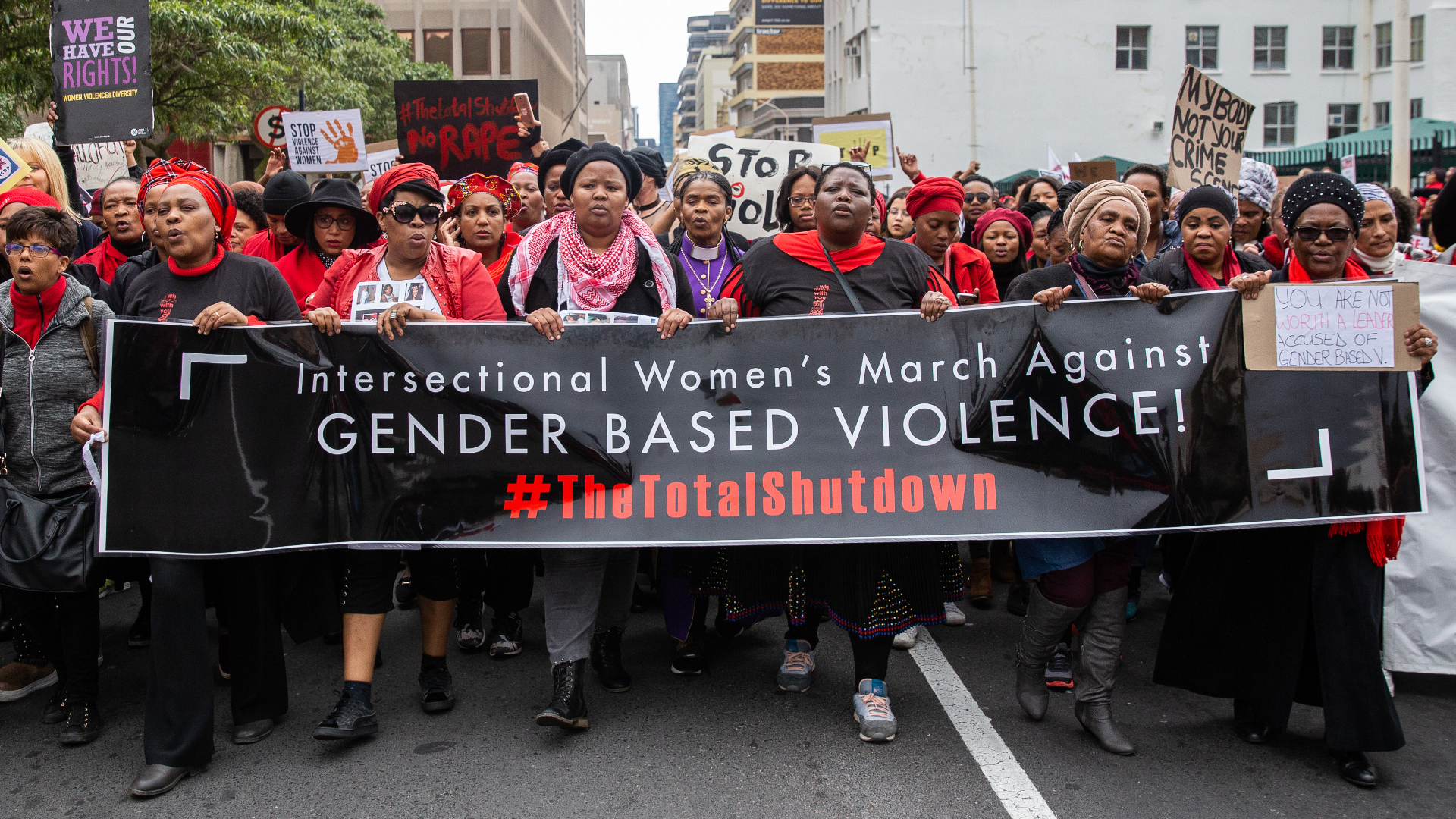
With gender-based violence continuing to be a serious problem in South Africa, organisations and young entrepreneurs are looking for innovative ways to ensure greater safety for women and girls.
South Africa faces high rates of gender-based violence (GBV). Bohlale Mphahlele, a 21-year-old tech whiz from the country, aims to make society safer.
When she was 16 and still in high school, Bohlale created the ‘Alerting Earpiece’. This gadget looks like an earring but does much more. It takes pictures of attackers and sends quick help messages with location info to trusted people and emergency teams. Her smart idea won her a bronze medal at the well-known Eskom Expo for Young Scientists during her high school years.
Five years later, Bohlale has founded Mphahlele Alerts (PTY) Ltd, aiming to bring her prototype to market. While pursuing a degree in Information Technology, she is committed to making the device accessible to South Africa’s most vulnerable populations, particularly women and children who are disproportionately affected by GBV.
South Africa is dealing with a GBV crisis that has reached epidemic levels.
The South African Police Service (SAPS) reports that from July to September 2024 more than 3 children and 10 women lost their lives each day. What’s more, 490 children were targets of attempted murder in this time frame, which shows a 35.7% rise compared to the year before.
A nationwide study revealed that physical violence affected 33.1% of South African women aged 18 and above. In 2023, out of 53,498 reported sexual offences, 42,780 cases involved rape.
These statistics underscore the urgent need for innovative solutions like Bohlale’s Alerting Earpiece. If it is possible for victims to call for help and gather evidence discreetly, the tool may have a major influence on the situation in preventing attacks and helping to punish the offenders.
Bohlale is unshakeable when it comes to her mission, regardless of the scant resources and technical difficulties associated with the launch of a tech product. Mphahlele Alerts is now investing all its efforts in reaching out to NGOs and the public sector in the hope of starting a pilot program of the device in high-risk areas.
‘I want the Alerting Earpiece to reach the most vulnerable, schoolgirls walking home alone, women working night shifts, those in abusive homes,’ Bohlale says. ‘Safety shouldn’t be a privilege.’
Bohlale’s efforts align with broader initiatives to combat GBV in South Africa.
In May 2024, the South African government established the National Council on Gender-based Violence and Femicide to oversee the implementation of the National Strategic Plan launched in 2020. Additionally, organizations like Ilitha Labantu are working to train police officers in handling GBV cases sensitively and effectively.
Bohlale Mphahlele’s story shows the impact that one individual can have in addressing systemic issues. Her innovative approach to combating GBV not only offers a practical tool for victims but also inspires a new generation to leverage technology for social good.
In a nation where safety is not guaranteed for all, Bohlale’s Alerting Earpiece represents a step toward a future where women and children can live without fear.
I’m Derrick (He/Him), a Journalism and Mass Communication graduate from the Technical University of Mombasa, Kenya. Currently I write about trending topics and major issues affecting Africa for Thred, specifically concerning SDGs. View my Twitter here if you’d like to send me feedback.
A bizarre event saw thousands of supermarket fridges targeted and mountains of food wasted. But as cyber-attacks like these become more common, their destabilising power proves more insidious than silly.
When supermarket staff arrived early on Sunday morning to stock shelves across France, they found food cooking in the freezers. Some chiller cabinets had risen from as low as -27C to well over 50C, and one shop in Normandy reported...
Gamers have started mashing together different video games using AI tools. So far, we’ve seen Mario in Halo, Minecraft in Skyrim, and much more. Mind-bending results aside, the tech required to pull this off has some people worried about online security and digital infrastructure.
Ever wondered what Super Mario 64 would look like in Halo: Combat Evolved? How about Wii Sports in Silent Hill? Fancy a Minecraft session in the...
With Gen AI now capable of creating functional molecular structures, Google has come up with a new system to tackle imminent biosecurity risks that come with such innovations.
Before modern AI, much of computational biology focused on storing, searching, and comparing biological data. Public databases allowed scientists to check whether a newly identified sequence resembled something already known, but that was it.
However, this changed in 2020, when Google DeepMind unveiled...
With America’s space ambitions only continuing to grow, Trump is turning his focus to the industry’s workforce that could keep the US ahead of adversaries like China.
In both his terms in office, aside from immigration and anti-wokeness, President Donald Trump’s focus has increasingly turned towards the space front. In 2019, he established the US Space Force (USSF), emphasising the growing importance of space to national security.
But this interest...
We use cookies to ensure that we give you the best experience on our website. If you continue to use this site we will assume that you are happy with it.






























 0 comments